When Motion Meets Stitch: Soccer Player Kicking a Ball in Motion S
There is a particular kind of silence that happens right before a design goes under the needle. You have prepped the fabric, hooped the stabilizer, and loaded the thread. Then you pause. You look at the file on screen one more time and ask yourself: Is this going to work? That is exactly where I found myself last week, staring at Soccer Player Kicking a Ball in Motion S, a football silhouette clipart that had landed in my review queue. I had a stack of blank canvas tote bags waiting for a custom order and a client who wanted something sporty, clean, and unmistakably in motion. This design promised bold shapes and clean vector lines. But promises on a screen mean nothing until they translate into thread on fabric.
First Look: The Shape Language of a Player in Flight
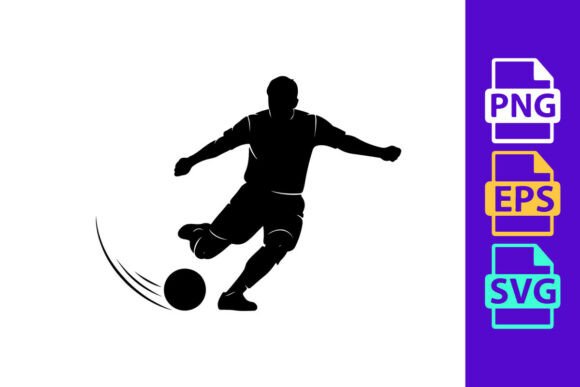
The first thing that strikes me about Soccer Player Kicking a Ball in Motion S is how much energy it packs into a silhouette. The body leans forward, one leg extended, the ball suspended just off the foot. There is a forward momentum here that feels natural, not stiff. Some sport silhouettes feel like posed mannequins. This one feels like a frame snatched from a live match. The bold shapes do the heavy lifting. There is no clutter, no unnecessary detail competing for attention. When you are evaluating a design for embroidery, silhouette clarity is everything. A design that reads well as a solid shape will read even better in thread.
I pulled the file up and immediately tested it in a black and white mockup. The contrast held beautifully. The negative space between the kicking leg and the ball created just enough separation to keep the shape readable at smaller sizes. That is critical for anyone planning to use this on products like caps, baby onesies, or narrow patches where real estate is limited.
Where This Design Belongs: A Tote Bag Test Case
Let me walk you through the actual project. A local soccer club wanted ten personalized tote bags for their junior coaches. The brief was simple: something sporty, professional, and practical. I chose a medium-weight natural canvas tote, hooped it with a cutaway stabilizer, and ran Soccer Player Kicking a Ball in Motion S at a width of about five inches. The result was immediate and clean. The bold silhouette translated into a satin-stitch-heavy outline with a fill stitch interior that laid down smoothly on the textured canvas. The canvas has a coarse weave, so I was watching for any puckering or thread gaps. Neither appeared. The stabilizer did its job, and the design held its shape without distortion.
What I appreciated most during this test was the scalability of the vector lines. The original design is listed under Illustrations as a Graphics asset, and that vector backbone matters. I scaled it down to three inches for a patch test and up to seven inches for a hoodie back panel. Both held up. At the smaller size, the space between the ball and the foot narrowed, so I would advise anyone using a small hoop to test that gap carefully. At larger sizes, the bold shapes filled the space beautifully without feeling bloated.
Thread Choices and Fabric Considerations
Silhouette designs can be deceptive. They look simple, but thread color and fabric texture can make or break them. I tested Soccer Player Kicking a Ball in Motion S on three different backgrounds: white cotton, heathered gray fleece, and a dark navy apron. On the white cotton, a single-color black thread created a crisp, high-contrast result that looked almost like a screen print. On the heathered fleece, I used a charcoal thread with a slightly lighter fill, and the texture of the fleece added a softness that worked well for casual apparel. The navy apron was the trickiest. Dark fabric demands a thread that pops without looking harsh. I used a metallic silver thread for the outline and a matte white for the fill, and the result felt premium without being gaudy.
If you are planning to stitch this on stretchy fabric, pause and think about stabilizer. A knit sweatshirt or a baby romper needs a firm backing, ideally a no-show mesh or a medium-weight cutaway. I also recommend running a test stitch on a scrap of the same fabric before committing to the final product. The bold shapes in this design mean that any fabric shifting during stitching will be obvious, especially around the extended leg and the ball.
Small Details That Matter in Production
When you stitch a design repeatedly for a product line, the small details start to matter in big ways. The angle of the player's body in Soccer Player Kicking a Ball in Motion S creates a subtle diagonal line that draws the eye across the product. On a tote bag, that diagonal works beautifully because it mirrors the natural carry angle of the straps. On a sweatshirt, it creates a dynamic focal point across the chest. On a cap, I would recommend positioning the design slightly off-center to follow the curve of the crown, because centering it perfectly can sometimes make the motion feel static.
I also noticed that the design has enough visual weight to stand alone. You do not need to add text, borders, or decorative flourishes. The silhouette speaks for itself. For small business owners and Etsy sellers, this is a gift. A design that works solo means faster production, fewer thread changes, and a cleaner finished product. You can list it as a standalone embroidered item without the customer asking for extra customization. That said, if you do want to add a name or a number beneath the player, the bottom edge of the design leaves a natural anchor point for text without crowding the composition.
Thinking Like a Customer: What Buyers Actually See
I have been selling handmade embroidered goods for over a decade, and I have learned that customers react to emotion before they react to technique. They do not care about stitch density numbers. They care about how a product makes them feel. Soccer Player Kicking a Ball in Motion S triggers a very specific emotional response. It reminds people of game day, of early morning practices, of a child scoring their first goal. That nostalgic pull is powerful. When I posted the finished tote bags on social media, three people asked about custom orders before I even finished writing the captions. That is the kind of buyer engagement a strong silhouette design can generate.
If you are building a craft business around personalized gifts, this design fits naturally into several product categories. Embroidered patches for soccer bags, monogrammed sweatshirts with the player silhouette on the sleeve, nursery decor for a sports-themed baby room, or even a set of kitchen towels for a football-loving family. The versatility comes from the simplicity of the shape. It does not scream for attention. It earns it.
Commercial Use and Licensing: What You Need to Know
Before you list any product featuring Soccer Player Kicking a Ball in Motion S, confirm the licensing terms. The product description mentions a clean scalable vector design with bold shapes and clean vector lines, but it does not spell out the specific commercial license details. As a professional reviewer, I cannot invent those terms for you. What I can tell you is that you should always check whether the license allows for finished product sales, digital product redistribution, or both. If you plan to sell embroidered sweatshirts, tote bags, or patches on Etsy, you need a license that covers physical finished products. If you plan to resell the digital embroidery file itself, that is a different license tier entirely. Do not assume. Verify.
Practical Embroidery Designer Notes
Here is what I would tell any embroiderer sitting down with this design for the first time. Test it on scrap fabric first. I know that sounds obvious, but too many people skip this step and regret it. Choose a thread color that contrasts well with your fabric. The bold shapes in this design lose their impact if the thread blends into the background. Review the stitch density before you run the full file. Silhouette designs with large fill areas can sometimes become too dense, leading to stiff fabric and thread breaks. If the file feels over-digitized, adjust the density in your software before stitching. Use a proper stabilizer for your fabric type. A cutaway for knits, a tearaway for woven cotton, and a water-soluble topper for towels or fleece. Check the hoop size against the design dimensions. The product description does not list exact sizes, so measure the file in your software before hooping. Inspect the small gap between the foot and the ball. That is the most vulnerable part of the design. If it is too narrow at your chosen size, scale up slightly or adjust the stitch angle to avoid thread buildup.
Where This Design Shines Brightest
After multiple test runs across different products, I can say with confidence that Soccer Player Kicking a Ball in Motion S performs best on medium to large flat surfaces. Tote bags, sweatshirt backs, pillow covers, and blanket corners are ideal. It also works well on structured items like aprons and tea towels, where the fabric is stable and the stitching surface is predictable. For curved surfaces like caps, it can work, but I would position it carefully and test the stitch path on a practice cap first. For tiny applications like keychains or zipper pulls, the detail may get lost, and I would recommend a simpler design instead.
What I appreciate most as a designer is the confidence this silhouette brings to a project. There is no guesswork. The motion is clear, the shape is bold, and the vector foundation means the lines stay clean at multiple sizes. If you are building a product line for a craft fair, an Etsy shop, or a boutique brand, this design gives you a reliable asset that customers recognize and respond to. It also pairs well with other sport-themed designs, so you can create a cohesive collection without visual clutter.
In the end, the tote bags I made for the soccer club were a hit. The coaches loved them. The kids recognized the silhouette instantly. And I added a new design to my go-to list for sport-themed projects. That is the real test of any embroidery design. Not how it looks on a screen, but how it lives in the world after the final trim.